Family preparation
Preparing for a Parent’s Doctor Home Visit: A Family Checklist
For a parent’s home visit, prepare two things: the information the doctor needs and the practical arrangements the family needs to agree on. Keep the parent involved, gather relevant records and confirm the assigned doctor, fees and address details before the team leaves.
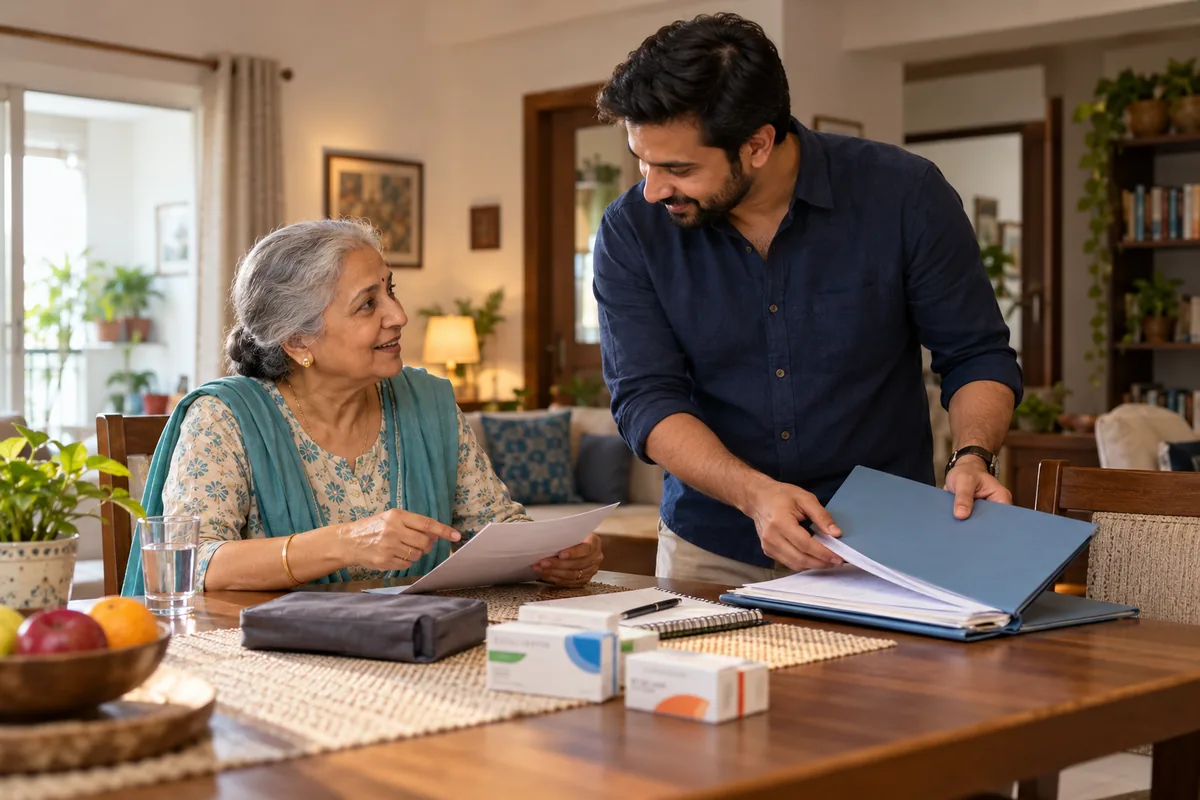
Let your parent lead the conversation
Ask which concerns they want to discuss and write the most important ones first. If they want a family member present, agree how that person will help, such as taking notes or remembering questions. Make space for a private conversation with the doctor if your parent prefers one.
Keep glasses or hearing aids available if used. Tell the team about communication needs when arranging the visit. These preparation points follow the National Institute on Aging’s appointment guidance.
Put the relevant information together
Gather current medicines, including non-prescription products and supplements, and note doses where known. Keep previous prescriptions, recent reports, discharge papers and known allergy information together. Write down symptoms and when they started so important details are not forgotten.
There is no need to create a polished file. A short list and the records you already have are a useful starting point. Ask the team how to share information securely; do not publish patient records in social-media comments.
Use this family coordination checklist
- Patient’s preferred name and the concern to discuss.
- Person coordinating the booking and a reachable phone number.
- Exact address, PIN code, tower and flat number where relevant.
- Society entry instructions, lift access or stairs.
- Who will be present, with the patient’s agreement.
- Who will keep the booking details and bill.
Share only the information needed for the visit. If relatives are coordinating from different cities, agree on one contact person to reduce conflicting messages.

Review the doctor and costs together
DocNCR shares the available doctor’s profile and DMC certificate before booking. Let your parent review the information or help them understand it if they want assistance. The team is dispatched only after the patient agrees.
The consultation is ₹1,499. The calling team provides a rate list in advance, while the visiting doctor decides any extra care after examining the patient. If you are helping with payment, discuss how the family will ask about additional charges before agreeing to them.
If you cannot be there in person
Ask your parent whom they would like to have nearby. Confirm with the calling team whether any proposed arrangement, such as having a relative available by phone, can be accommodated. Do not assume that video participation, a particular language or a particular doctor is automatically available.
Give the person at the home the confirmed booking details. Avoid leaving several relatives to make separate bookings for the same visit.
Before the visit ends
Ask your parent whether their main concerns were addressed. Write down the next steps explained by the doctor and ask who to contact if anything is unclear. Confirm any follow-up arrangements and charges rather than assuming ongoing care is included in a single consultation.
This is a preparation checklist, not a treatment plan. The clinician decides what assessment and care are appropriate for the individual patient.
Frequently asked questions
Can I arrange a visit for a parent while I am elsewhere?
You can contact DocNCR to discuss a booking, but keep the patient involved and confirm practical arrangements with the calling team. Do not assume remote participation is included.
What should I prepare for the doctor?
Gather the patient’s concerns, current medicines, relevant prescriptions and reports, allergy information and practical access details.
Is every senior patient assigned the same doctor?
No. DocNCR uses available locum and regular doctors. Ask about any doctor preference before confirming the visit.
Further reading
This guide explains booking and preparation. The visiting doctor decides what assessment and care are appropriate for the patient. It is not an individual treatment plan.