When Should You Call a Doctor at Home Instead of Going to the Hospital?
Call a doctor at home for non-emergency symptoms like fever, cough, stomach issues, minor injuries, chronic monitoring, or when travel to hospital is difficult. Go directly to hospital for chest pain, severe bleeding, stroke signs, major trauma, or breathing emergencies.
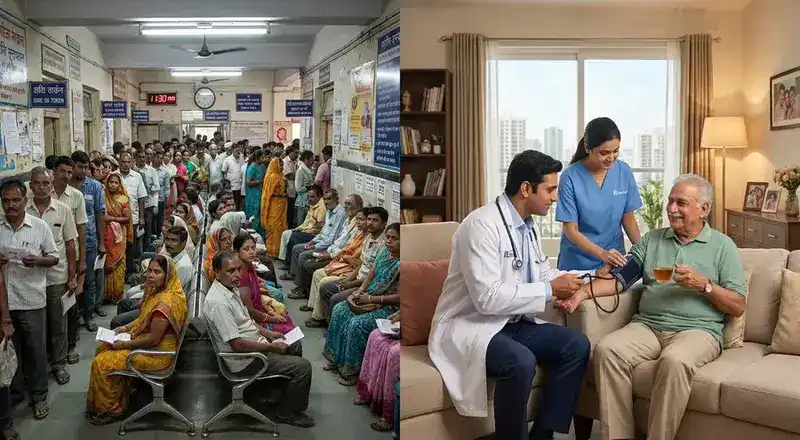
When is a doctor at home the better choice than a hospital visit?
A doctor at home is the better choice when symptoms are manageable but uncomfortable, when the patient is elderly or bedridden, when infection exposure should be avoided, or when you need reliable care outside hospital hours without the stress of an emergency queue.
Delhi NCR hospitals are excellent for serious care but can be crowded and time-consuming for minor illness. A home visit gives you prompt, personalised attention without the chaos of an emergency waiting area.
Home care is also ideal for follow-up after a hospital stay, medication reviews, and chronic disease monitoring. It keeps patients out of hospitals unless truly necessary.
What symptoms can be safely treated by a home doctor in Delhi?
Home doctors commonly treat fever, cold and cough, flu, sore throat, stomach pain, vomiting, diarrhoea, mild asthma, urine infections, skin rashes, back pain, and minor wounds. They assess severity carefully and refer you to hospital promptly if any warning signs appear.
| Symptom group | Examples suitable for home visit |
|---|---|
| Fever & body ache | Viral fever, seasonal flu, dengue monitoring. |
| Respiratory symptoms | Cough, cold, mild breathlessness, throat infection. |
| Digestive issues | Acidity, vomiting, diarrhoea, constipation, stomach pain. |
| Chronic monitoring | BP, diabetes, thyroid checkups and medication review. |
| Senior care | Weakness, fall assessment, medication reconciliation. |
If symptoms worsen or new warning signs appear, the home doctor will advise hospital transfer. The goal is to treat early and escalate quickly when needed.
Can a home doctor handle emergencies?
Home doctors can stabilise a patient and provide initial treatment, but they are not a substitute for a hospital emergency department. Life-threatening emergencies such as chest pain, severe breathing difficulty, or major trauma need hospital care with advanced equipment and specialists.
DocNCR teams carry basic emergency supplies and are trained in first response. However, advanced interventions like surgery, ICU care, angioplasty, and CT scans are only available in hospitals.
When you call, our dispatcher asks targeted questions. If the case sounds critical, we tell you to go to the nearest hospital immediately rather than waiting for a home visit.
How does DocNCR decide if a case needs hospital referral?
DocNCR uses symptom triage, vital-sign assessment, and medical history to identify red flags. If a patient shows signs of a serious condition, the doctor explains the situation clearly to the family and recommends immediate hospital transfer with documentation for continuity of care.
Red flags include severe chest pain, difficulty breathing, altered consciousness, persistent high fever with confusion, seizures, heavy bleeding, and suspected stroke or heart attack. These are time-sensitive conditions.
Even when a home visit is booked, the doctor may change the recommendation after examining the patient. Patient safety is always the deciding factor.
What are the benefits of calling a doctor at home for non-emergencies?
Benefits include faster care, no travel stress, lower infection risk, longer consultation time, care in familiar surroundings, and easy family involvement. Home care also lets the doctor observe your living conditions, which helps with fall prevention and medication organisation advice.
For a working parent or adult child managing elderly parents, a home visit removes the logistics of hospital trips. The doctor comes when it suits your family, even at night.
You also avoid the unnecessary use of emergency services for minor issues, freeing hospital resources for those who truly need them.
When should I go directly to the emergency room?
Go directly to the emergency room for chest pain, severe shortness of breath, stroke symptoms, severe injuries, heavy bleeding, seizures, anaphylaxis, or sudden loss of consciousness. These conditions need hospital equipment, specialist teams, and immediate interventions that cannot be provided safely at home.
In these situations, minutes matter. Call your local ambulance or have someone drive you to the nearest hospital emergency department. Do not wait for a home doctor.
If you are unsure whether a symptom is an emergency, it is better to call DocNCR and describe it. We will tell you immediately if you need hospital care.
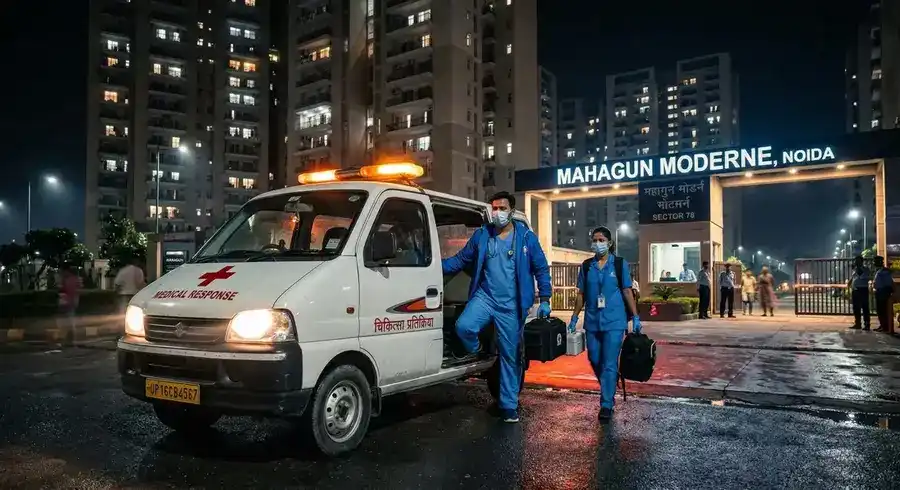
Book a trusted doctor at home in Delhi NCR today.
Call +91-8796933327Frequently Asked Questions
When should I call a doctor at home instead of going to hospital?
Call a home doctor for non-emergency symptoms, chronic monitoring, elderly care, or when travel is difficult. Go to hospital for life-threatening emergencies.
What symptoms can a home doctor treat?
Fever, cough, cold, flu, stomach issues, vomiting, diarrhoea, mild asthma, urine infections, skin rashes, back pain, and minor wounds.
Can a home doctor treat emergencies?
Home doctors can stabilise patients but cannot replace hospital emergency departments for serious or life-threatening conditions.
How does DocNCR triage patients?
Dispatchers ask targeted questions, and doctors assess vitals and red flags during the visit. Critical cases are referred to hospital immediately.
Is a home visit faster than hospital A&E for minor illness?
Yes. DocNCR targets a 20-minute arrival, while hospital A&E visits can take several hours for non-critical cases.
What are emergency red flags that need a hospital?
Chest pain, severe breathlessness, stroke signs, heavy bleeding, seizures, loss of consciousness, and major trauma.
Do home doctors come at night in Delhi NCR?
Yes. DocNCR operates 24/7, including late nights and early mornings.
What does a home doctor visit cost?
DocNCR charges a flat ₹1,499 per visit, payable only after care is complete.
Key Takeaways
- Call a doctor at home for manageable symptoms, chronic care, and situations where travel is difficult.
- Go to hospital immediately for chest pain, severe breathing problems, stroke signs, heavy bleeding, seizures or major trauma.
- DocNCR triages every call and visit to ensure the right level of care.
- Home visits reduce infection exposure, save time, and allow family involvement.
- Pay only after care with DocNCR's flat ₹1,499 fee.