Is Home Healthcare Safe for Elderly Patients? What Families in Delhi NCR Should Know
Yes, home healthcare is safe for elderly patients in Delhi NCR and is often the preferred option for families. It eliminates travel stress, reduces infection exposure, and allows doctors to spend more time understanding age-related health needs in a familiar environment.
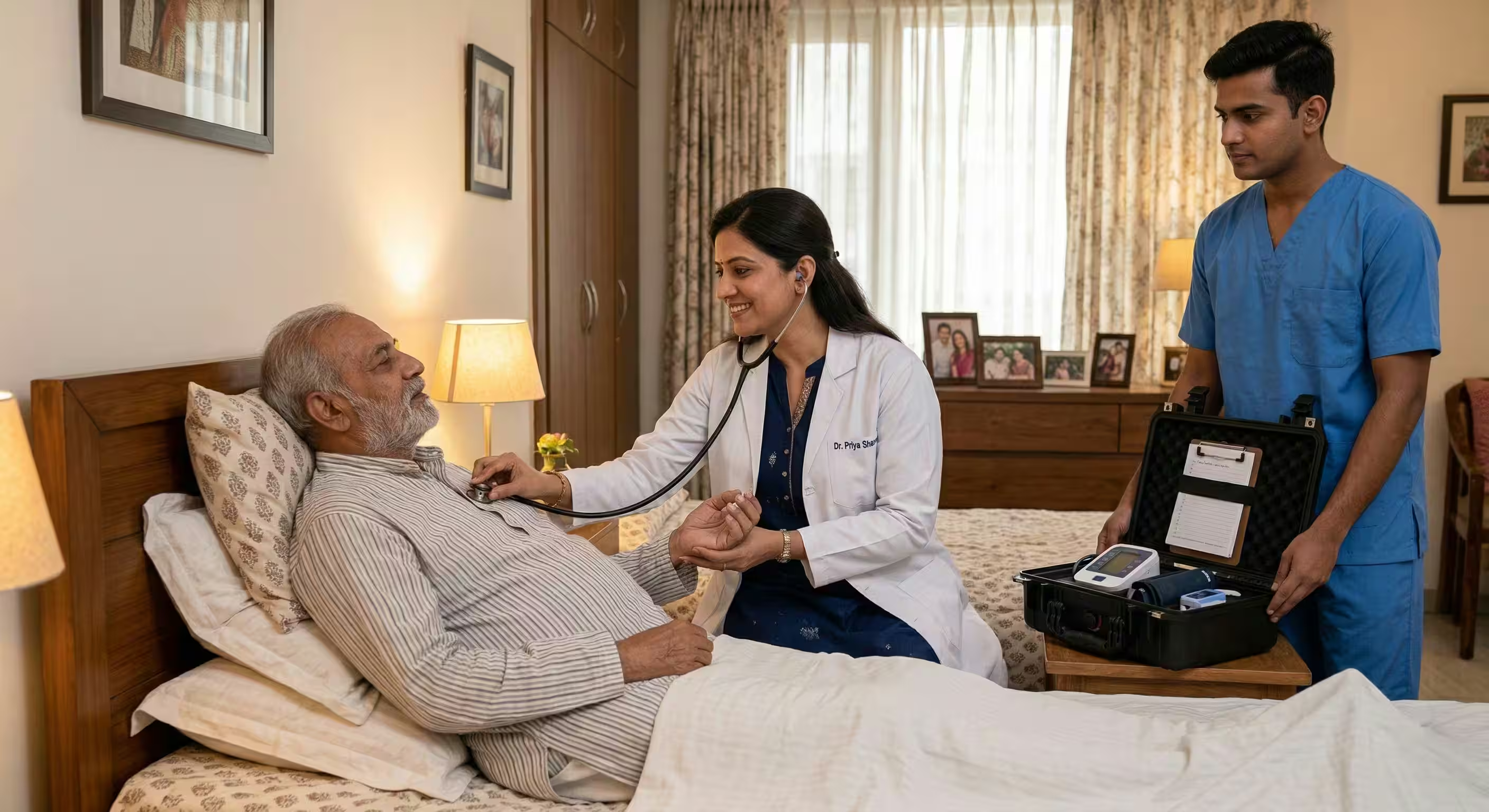
Is home healthcare safe for elderly patients in Delhi NCR?
Yes. When provided by verified MBBS doctors and trained assistants, home healthcare is a safe, effective way to manage routine illness, chronic conditions, and post-hospital recovery for seniors. Care is delivered in a familiar environment with fewer infection risks than crowded clinics.
Hospitals and clinics can be exhausting for elderly patients. Long waits, bright lights, hard benches and exposure to infections make a simple consultation risky. A home visit removes all of these stressors.
Family members can be present during the examination, ask questions, and observe the doctor's advice. This transparency builds confidence and helps everyone follow the care plan correctly.
How do home doctors handle age-related health risks?
Home doctors are trained to recognise frailty, dehydration, medication side effects, falls risk, and atypical symptoms in seniors. They adjust examinations to be gentle and thorough, communicate clearly and patiently with caregivers, and coordinate follow-up when specialist input is needed.
Older adults often do not present symptoms the same way younger patients do. A urinary infection may cause confusion instead of fever, and a heart problem may show up as weakness rather than chest pain. Experienced home doctors know these differences.
The doctor also reviews all current medicines to check for interactions, duplications, or doses that may need adjustment. This medication reconciliation is one of the most valuable parts of senior home care.
Can a home doctor manage multiple medications for seniors?
Yes. The doctor reviews every prescription, over-the-counter medicine, and supplement you take, explains dosages and timings, and suggests changes to simplify the regimen or reduce side effects. This medication review is especially important when multiple specialists are involved in your care.
Polypharmacy — taking five or more medicines — is common in seniors and increases the risk of falls, confusion and hospitalisation. A home doctor can identify unnecessary drugs and coordinate with specialists if changes are needed.
Families receive a clear written medication schedule. The doctor also explains what each medicine does, when to take it, and which symptoms should prompt a call.
What safety checks are done during an elderly home visit?
The team checks blood pressure, pulse, oxygen level, temperature, blood sugar if needed, hydration status, mobility, skin condition, and mental alertness. These baseline measurements help detect early warning signs and allow the doctor to intervene before a minor issue becomes serious.
These checks are done in the senior's usual environment, which often gives more accurate readings than a stressful clinic. The doctor also looks for trip hazards, adequate lighting, and signs that daily living support may be needed.
If anything concerning is found, the doctor speaks directly with the family about the next steps, whether that means adjusting medicines, ordering tests, or considering hospital evaluation.
Are family members involved in elderly home healthcare?
Absolutely. Family members are encouraged to be present during the visit, share observations about sleep, appetite, mood, and mobility, and learn how to support daily care such as medication timing, diet, and warning signs. This teamwork improves outcomes and reduces caregiver anxiety.
Many families in Delhi NCR are nuclear or have children working long hours. A home visit lets the available family member understand the senior's condition without needing to take them across the city.
The doctor can also advise when a full-time attendant, physiotherapist or nurse may be helpful, and connect families with trusted partners.
When should an elderly patient go to hospital instead?
Seniors should go to hospital for chest pain, severe breathlessness, stroke symptoms, heavy bleeding, high fever with confusion, serious falls, or any sudden major change in condition. A home doctor can help recognise these red flags and coordinate safe transport when needed.
Home healthcare supports ongoing and non-urgent care. It is not a replacement for emergency services. When a situation is life-threatening or needs advanced diagnostics, the doctor will advise immediate hospital transfer.
DocNCR teams carry basic emergency supplies and can stabilise the patient while the family arranges transport. Quick decision-making saves lives in elderly care.
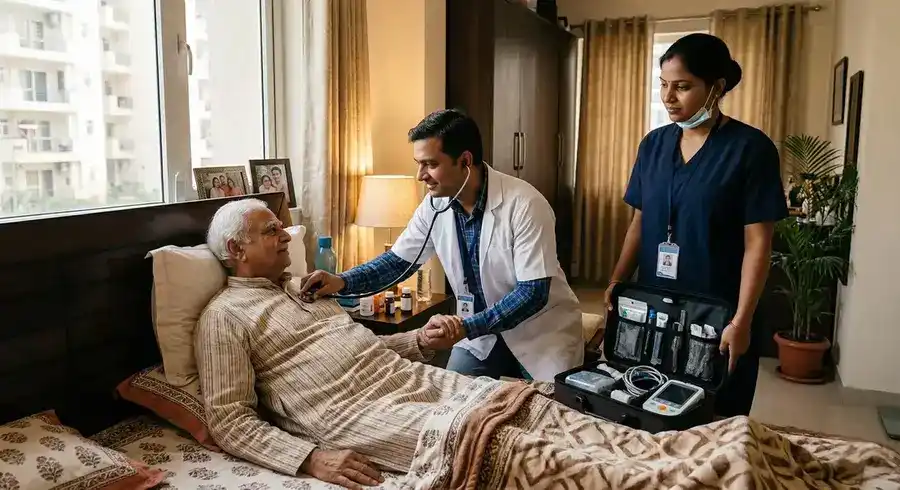
Book a trusted doctor at home in Delhi NCR today.
Call +91-8796933327Frequently Asked Questions
Is home healthcare safe for elderly patients?
Yes. It avoids travel stress, reduces infection exposure, and allows longer, more personalised consultations in a familiar environment.
Can a home doctor manage multiple chronic conditions in seniors?
Yes. The doctor reviews medications, monitors vitals, and coordinates care for diabetes, BP, thyroid, arthritis and other common senior conditions.
What safety checks are included in a senior home visit?
The team checks BP, pulse, oxygen level, temperature, blood sugar, hydration, mobility, skin and mental alertness.
Do family members need to be present during the visit?
Family members are encouraged to be present to ask questions and learn the care plan, but it is not mandatory.
How often should an elderly patient see a home doctor?
It depends on the condition. Stable seniors may need monthly checkups, while those recovering from illness may need weekly or bi-weekly visits.
When should a senior go to hospital instead of a home visit?
For chest pain, severe breathlessness, stroke signs, heavy bleeding, high fever with confusion, or serious falls, go to hospital immediately.
Does DocNCR serve senior patients across Delhi NCR?
Yes. DocNCR covers Delhi, Noida, Greater Noida, Ghaziabad and Gurgaon with doctor-plus-assistant teams.
What does a senior home visit cost?
DocNCR charges a flat ₹1,499 per visit with no night, weekend or distance surcharges.
Key Takeaways
- Home healthcare is safe and often preferred for elderly patients in Delhi NCR.
- Doctors manage age-related risks, review medications, and check vital signs at home.
- Family involvement improves understanding and follow-through on care plans.
- Emergency symptoms still require immediate hospital care.
- DocNCR offers flat ₹1,499 visits with doctor-plus-assistant teams across Delhi NCR.