Fever, Flu, or Infection? When a Home Doctor Visit Is the Right Choice in Delhi
A home doctor visit is the right choice for fever, flu, or infection in Delhi when symptoms are uncomfortable but not life-threatening. It avoids clinic queues, reduces infection spread, and lets the doctor assess you in a calm home environment.

Can a home doctor treat fever, flu, and infections in Delhi?
Yes. Home doctors in Delhi NCR regularly treat viral fever, seasonal flu, throat infections, urinary tract infections, stomach infections, and skin infections that do not require hospital admission. Home care keeps you resting in your own bed while receiving timely diagnosis and treatment.
During Delhi's seasonal viral peaks, clinics overflow with sick patients. A home visit keeps you away from that crowd while still receiving a proper examination and prescription.
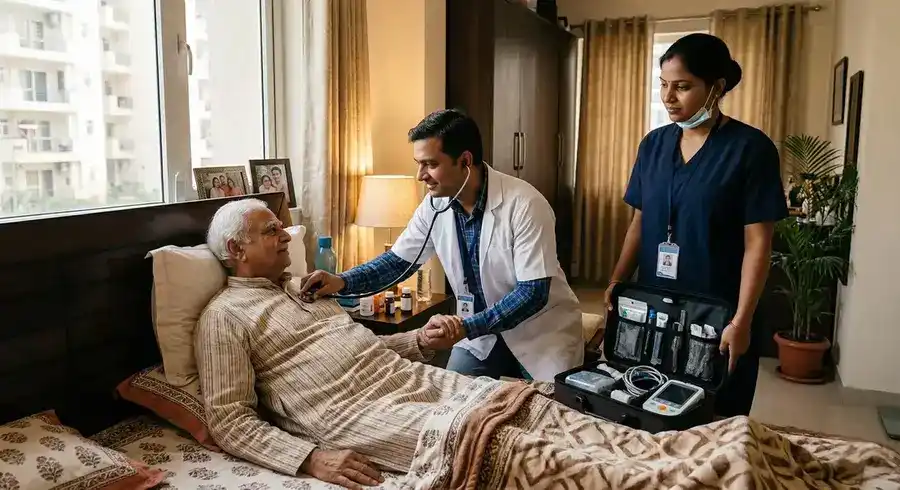
The doctor checks temperature, pulse, blood pressure, oxygen level, and hydration status. If malaria, dengue, typhoid or COVID-19 is suspected, they advise the right tests.
When is a home visit better than a clinic for fever?
A home visit is better when the patient is weak, has a high fever, is contagious, is elderly or a young child, or when visiting a clinic would mean long travel and waiting in a crowded space. It also reduces the risk of spreading infection to others.
Moving a feverish child or senior through traffic and heat can worsen dehydration and discomfort. At home, the patient can rest while the doctor comes to them.
If multiple family members are ill, a single home visit can assess everyone efficiently, reducing repeated clinic trips and cross-infection in waiting areas.
What symptoms during a flu need a doctor at home?
Call a home doctor for persistent fever above 101°F, severe body ache, a persistent cough, sore throat with difficulty swallowing, signs of dehydration, or fever lasting more than two days. Timely medical assessment at home can prevent complications and unnecessary hospital visits.
These symptoms can indicate a bacterial infection or complications like pneumonia, especially in seniors, children, diabetics, and people with weak immunity. Early medical review prevents worsening.
A home doctor can also advise isolation practices if the illness is contagious, protecting the rest of the household.
How does DocNCR handle contagious infections at home?
DocNCR teams use masks, gloves, hand sanitiser, and disposable equipment covers during every contagious-infection visit. They also advise family members on distancing, ventilation, hand hygiene, and waste disposal to limit spread and protect vulnerable people such as infants and seniors in the household.
The doctor and assistant take precautions during the visit and disinfect their kit afterwards. Patients with suspected highly contagious illness are encouraged to inform us when booking so we can prepare accordingly.
For suspected dengue, malaria, typhoid or COVID-19, the doctor coordinates testing and follows up on reports without requiring another clinic visit.
What should I do before the doctor arrives for a fever?
Rest in a cool, ventilated room, drink plenty of fluids, note temperature readings and timing, keep current medicines and past reports ready, and avoid taking heavy painkillers that might mask symptoms. A brief symptom log helps the doctor make a faster, more accurate diagnosis.
A simple log of fever times and temperatures helps the doctor spot patterns. Also note any rash, cough, vomiting, urine changes, or recent travel or food exposure.
Have a mask ready if the patient is coughing, and ask other family members to maintain some distance during the examination.
When should fever or infection lead to hospital care?
Go to hospital for difficulty breathing, chest pain, confusion, severe weakness, persistent vomiting, seizures, a stiff neck with fever, or fever above 104°F that does not respond to medication. These signs may indicate a serious infection that needs hospital-based tests and treatment.
These can be signs of serious infections like pneumonia, meningitis, sepsis, or severe dehydration. Home care is not appropriate in these situations.
If you are unsure, call DocNCR and describe the symptoms. We will guide you to the right level of care immediately.
Book a trusted doctor at home in Delhi NCR today.
Call +91-8796933327Frequently Asked Questions
Can a home doctor treat fever and flu in Delhi NCR?
Yes. Home doctors treat viral fever, flu, throat infections, stomach infections, urine infections, and skin infections that do not need hospital admission.
When should I call a doctor at home for fever?
Call for high or persistent fever, severe body ache, persistent cough, sore throat, dehydration, or fever lasting more than two days.
Is a home visit safe for contagious infections?
Yes. DocNCR teams use protective gear, sanitise equipment, and advise family members on isolation and hygiene.
What tests can be done at home for fever?
Blood tests for malaria, dengue, typhoid, CBC, and COVID-19 can be arranged through home sample collection.
Should I go to hospital for fever?
Go to hospital for difficulty breathing, chest pain, confusion, seizures, stiff neck, or very high fever that does not come down with medication.
How much does a fever home visit cost?
DocNCR charges a flat ₹1,499 per visit. Tests and procedures are quoted separately if needed.
Can a home doctor visit children with fever?
Yes. Home visits are especially helpful for feverish children, avoiding clinic exposure and travel stress.
How quickly can a doctor come for fever in Delhi NCR?
DocNCR targets a 20-minute arrival across Delhi NCR, depending on location and traffic.
Key Takeaways
- Home doctor visits are ideal for fever, flu, and infections that do not require hospital admission.
- They reduce clinic exposure, travel stress, and infection spread within the community.
- DocNCR teams use protective gear and can coordinate home tests for dengue, malaria, typhoid and COVID-19.
- Keep a fever log and stay hydrated before the doctor arrives.
- Seek hospital care for breathing difficulty, chest pain, confusion, seizures, or very high fever.