Home Healthcare for Chronic Conditions: Managing Diabetes, BP, and Thyroid at Home in Delhi
Diabetes, blood pressure, and thyroid can be managed effectively at home in Delhi NCR through regular doctor visits, home-based monitoring, medication reviews, blood tests, and lifestyle counselling. Home care makes chronic disease management consistent, convenient, and less stressful for patients and caregivers.
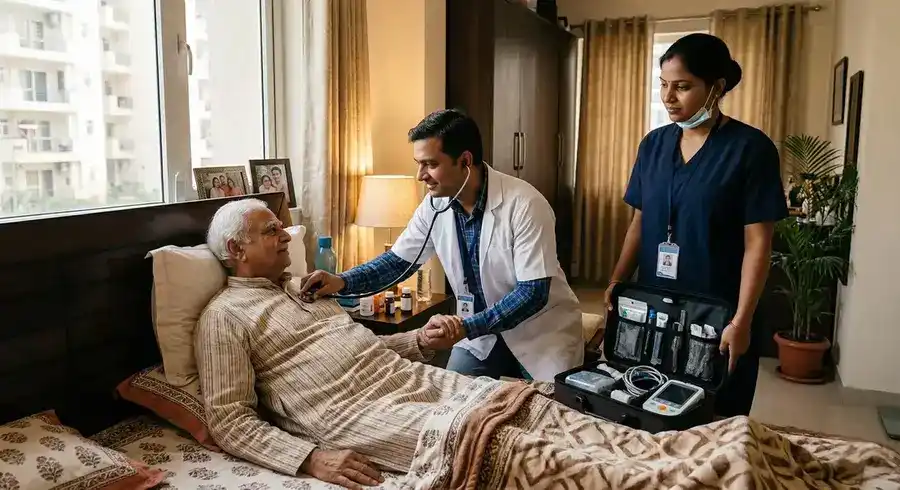
Can diabetes, BP, and thyroid be managed at home in Delhi?
Yes. Chronic conditions such as diabetes, high blood pressure, and thyroid disorders can be managed effectively at home in Delhi NCR through regular monitoring, periodic doctor visits, medication adjustments, and home-collected lab tests. This approach keeps treatment consistent, catches changes early, and removes the stress of repeated clinic trips.
Millions of Delhi NCR residents live with diabetes, hypertension, or thyroid disorders. These conditions need ongoing attention rather than one-off emergency visits. Home healthcare fills that gap.
A home doctor sees the patient in their real environment, which often reveals diet, stress, and lifestyle factors that clinic consultations miss.
How does a home doctor monitor blood sugar and BP?
The doctor checks your blood pressure, pulse, weight, and performs a finger-prick blood sugar test during each visit. These readings are tracked over time to identify trends, adjust dosages, and prevent complications such as hypoglycaemia or uncontrolled hypertension, all without you leaving home.
For diabetes, the doctor may also review your glucometer log, check HbA1c through home blood collection, and examine feet and vision for complications. For BP, multiple readings at different times give a clearer picture than a single clinic measurement.
Home monitoring is especially useful for seniors whose BP spikes in clinic settings due to anxiety — a phenomenon known as white-coat hypertension.
What does a thyroid care home visit include?
A thyroid visit includes a detailed symptom review, neck examination, heart rate check, weight tracking, and blood tests for TSH, T3, and T4. The doctor then adjusts your medication, explains diet and lifestyle factors, and schedules follow-up tests to keep your hormone levels balanced.
Thyroid disorders often cause subtle symptoms like fatigue, weight changes, hair fall, and mood swings. Regular follow-up ensures the dose stays optimal and side effects are caught early.
Home sample collection means the patient does not need to travel to a lab every few months. Reports are reviewed by the doctor and explained to the family.
How often should chronic patients see a home doctor?
Stable patients usually benefit from a monthly checkup, while those with recent medication changes, uncontrolled readings, or complications may need weekly or bi-weekly visits initially. Your home doctor will tailor the schedule based on your latest reports, symptoms, and overall cardiovascular risk.
The frequency is tailored to the patient. After each visit, the doctor recommends the next appointment based on progress, test results, and any new symptoms.
Regular visits reduce the chance of silent damage to the heart, kidneys, eyes, and nerves — the main risks of uncontrolled diabetes and hypertension.
Can home doctors adjust chronic medication doses?
Yes, within safe limits. Home doctors can adjust doses, change timing, or suggest alternatives based on your response, latest reports, and overall treatment goals. Major changes are always discussed with your treating specialist and documented clearly for continuity of care.
Medication adjustment is one of the most important parts of chronic care. Small dose changes can bring BP, sugar, or thyroid levels back into range and prevent hospitalisation.
DocNCR doctors document every change and communicate with your specialist when needed. Patients should never stop or change medicines without medical advice.
What lifestyle advice do home doctors provide for chronic conditions?
Doctors advise on diet, salt and sugar intake, portion control, regular exercise, sleep quality, stress management, medication timing, and warning signs that need urgent care. Small, consistent lifestyle changes, when followed carefully, often make a bigger long-term difference than medication alone.
Because the doctor sees the patient at home, advice can be practical and specific — such as substituting common Delhi snacks, planning walks in nearby parks, or managing medication around meal times.
Family members are included in the discussion so everyone understands the diet plan, emergency signs, and when to call the doctor between scheduled visits.
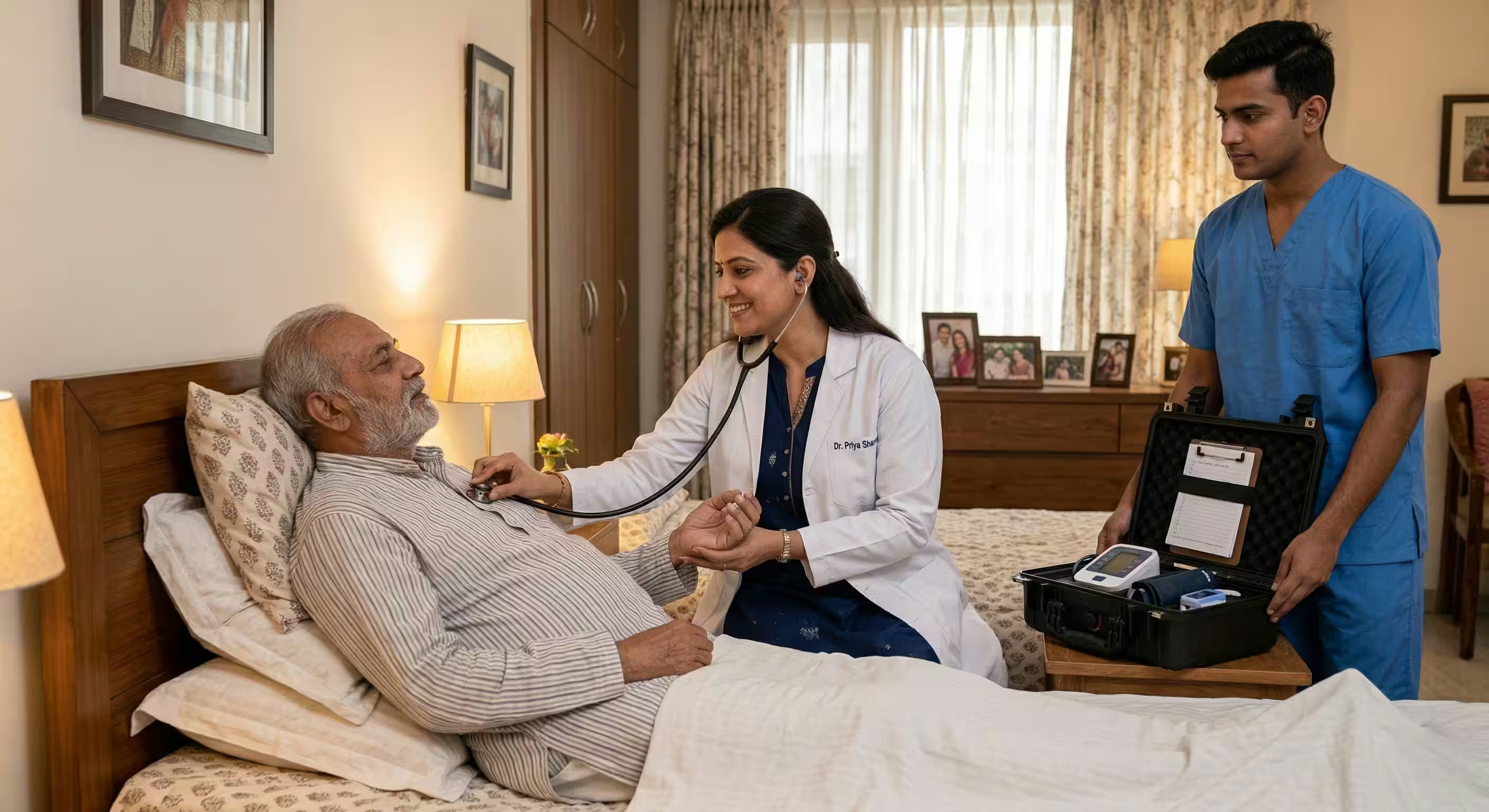
Book a trusted doctor at home in Delhi NCR today.
Call +91-8796933327Frequently Asked Questions
Can chronic conditions be managed at home in Delhi NCR?
Yes. Regular home doctor visits, monitoring, medication reviews, and lab tests help manage diabetes, BP, thyroid, and other chronic conditions.
How often should a diabetes patient see a home doctor?
Stable patients usually need monthly visits; uncontrolled cases may need weekly or bi-weekly visits initially.
What tests are done at home for chronic care?
BP, blood sugar, pulse, weight, and home blood sample collection for HbA1c, lipid profile, thyroid function, kidney function, and liver function tests.
Can a home doctor change my BP or diabetes medicine?
Home doctors can make safe dose adjustments and timing changes, coordinating with your specialist for major changes.
Is home monitoring better than clinic monitoring for BP?
Home readings often reflect true BP better because they avoid white-coat anxiety and can be taken at multiple times.
What lifestyle advice is given for diabetes?
Diet control, portion sizes, reduced sugar and refined carbs, regular walks, stress management, and consistent medication timing.
Does DocNCR offer chronic care packages?
DocNCR offers recurring visit plans for chronic patients across Delhi NCR. Contact us to customise a plan.
When should a chronic patient go to hospital?
Go to hospital for chest pain, severe breathlessness, fainting, very high BP or sugar, confusion, or signs of stroke or heart attack.
Key Takeaways
- Diabetes, BP, and thyroid can be effectively managed at home with regular visits and monitoring.
- Home readings often give a truer picture than single clinic measurements.
- Doctors can adjust medication safely and coordinate with specialists.
- Lifestyle advice is personalised to your home environment and daily routine.
- DocNCR offers recurring chronic care visits across Delhi NCR at a flat ₹1,499 fee.